
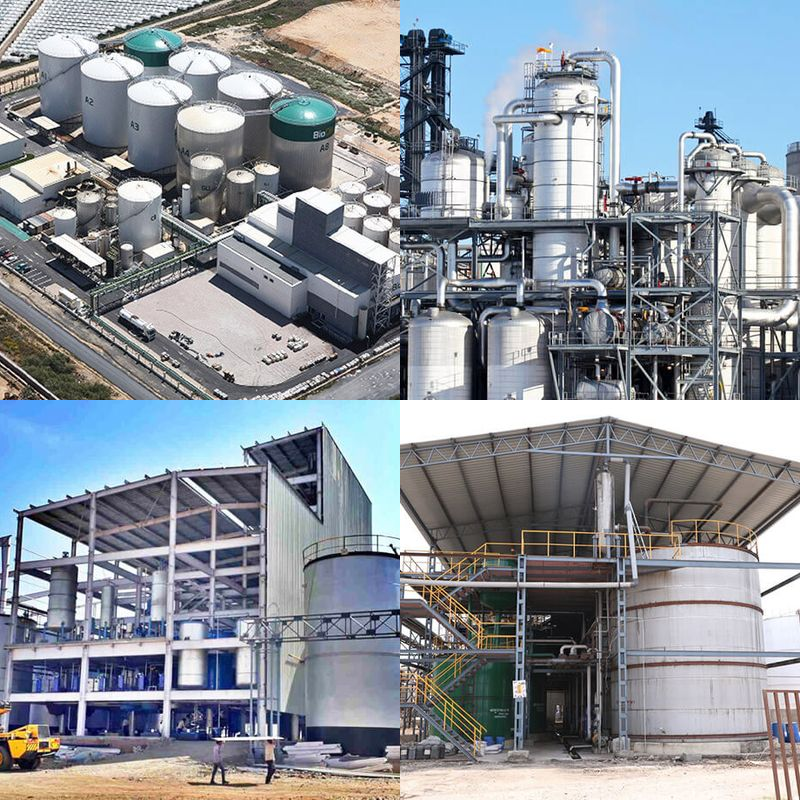
Biodiesel Production Line
An integrated biodiesel production plant converting crude vegetable or animal oils into specification-grade biodiesel via transesterification, with glycerin separated as a valuable by-product.
Project Concept
An integrated factory producing biodiesel fuel from crude or used vegetable oils and crude animal oils, yielding biodiesel that meets specifications with glycerin as a by-product.
Project Overview
Biodiesel is a renewable and cleaner-burning alternative to petroleum diesel. Producing it from locally available vegetable and animal oils diversifies the energy mix, reduces carbon emissions, and yields two marketable products: biodiesel and glycerin.
Main Components
Key equipment and units that make up the production line
Crude Oil Feed Tank
- Capacity: 1–100 tons/day
- Side heating jacket to raise oil to 60–70 °C
Transesterification Reactor
- Stainless steel reactor with high-speed agitator
- Methanol + KOH/NaOH addition
- Temperature control: 55–65 °C
- Atmospheric pressure
Glycerin Separator (Decanter)
- Gravity separator or decanter
- Collects glycerin as a marketable by-product
Neutralisation & Washing Unit
- Removes residual alkaline material
- 2– stage water washing tank
Drying Unit
- Removes residual moisture
- Heating at 80–100 °C
Product Storage Tanks
- Tank for biodiesel
- Tank for glycerin
- Tank for waste streams
Operating Cycle
Cycle duration: Batch: 6–10 hours; Continuous: runs to production capacity
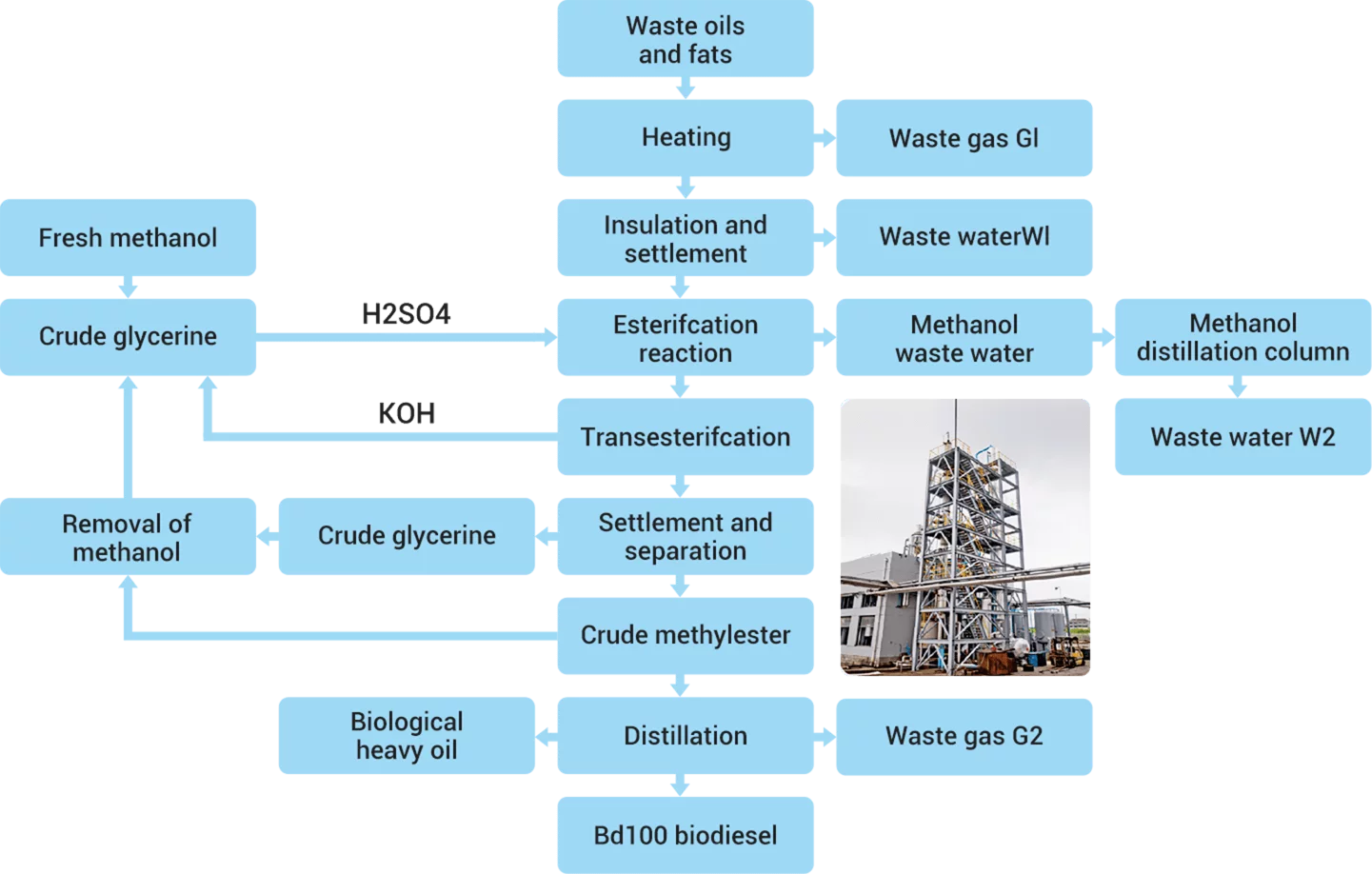
- 1Feed crude oil into feed tank and heat to 60–70 °C
- 2Transfer to transesterification reactor
- 3Add methanol and KOH/NaOH catalyst
- 4React at 55–65 °C under agitation
- 5Separate glycerin via decanter
- 6Neutralise and wash to remove residual alkali
- 7Dry at 80–100 °C to remove moisture
- 8Collect biodiesel and glycerin into product tanks
Input / Output Ratios
Approximate production yields at different capacities
| Capacity | Raw Input | Biodiesel | Glycerin | Loss |
|---|---|---|---|---|
| 1 ton | 1,000 kg crude oil | 880 kg | 100 kg | 20 kg |
| 10 tons | 10 tons | 8.8 tons | 1 ton | 0.2 tons |
| 50 tons | 50 tons | 44 tons | 5 tons | 1 ton |
| 100 tons | 100 tons | 88 tons | 10 tons | 2 tons |
Energy Consumption
Approximate requirements per production capacity
Project Advantages
Meets government biodiesel specifications
High profit margin
Suitable for export
Flexible operation with any vegetable or animal oil
Glycerin by-product adds additional revenue stream
Technical & Engineering Study Data – All Capacities
| Project | Capacity (ton/day) | Area (m²) | Power (kW) | Water (m³/day) | Operating System | Engineering Notes |
|---|---|---|---|---|---|---|
| Biodiesel Production Line | 1 | 40 | 20 | 1 | Batch | Raw tank, conversion reactor, glycerin separation, washing, drying |
| 10 | 120 | 80 | 8 | Semi-continuous | Extra conveyor lines, larger tanks, thermal control unit | |
| 50 | 600 | 250 | 40 | Continuous | Integrated plant, full PLC system, dual glycerin separation | |
| 100 | 1000 | 500 | 80 | Continuous | High efficiency continuous operation, multiple tanks, advanced washing unit |
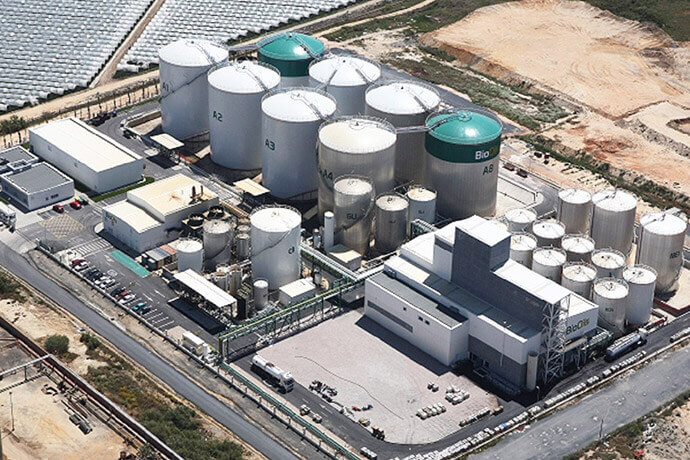
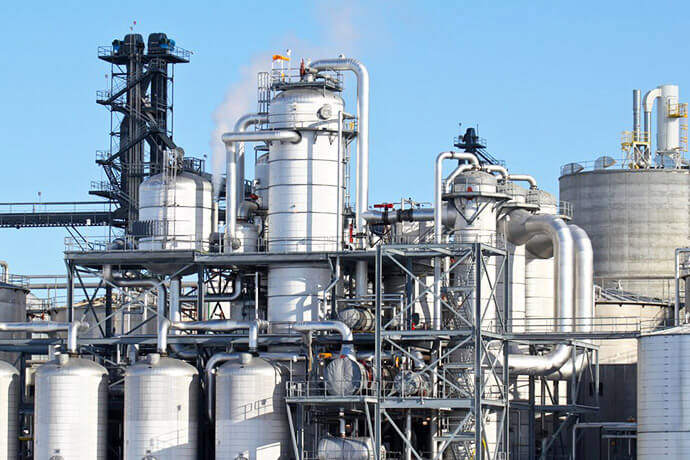
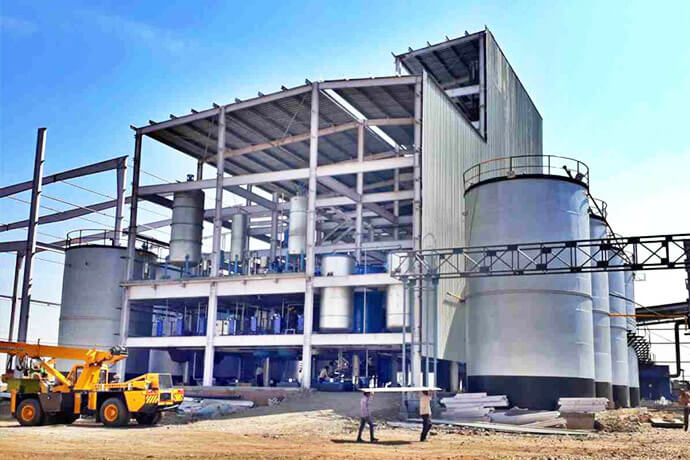
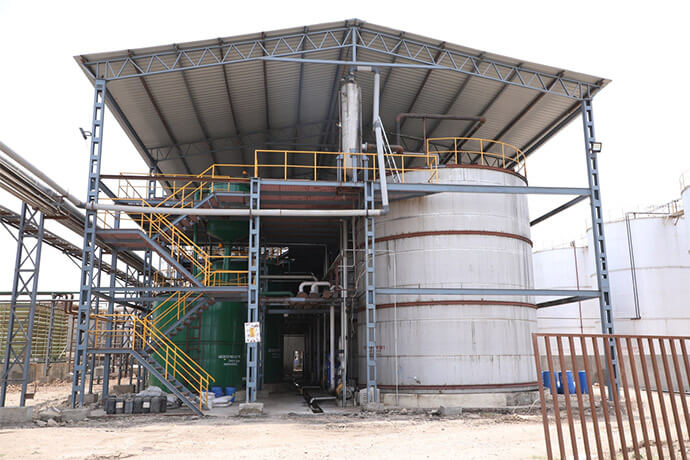
Images
Turn Your Idea Into a Full Production Line
Our engineering team will respond within 24 hours with a customised proposal — from concept to turnkey delivery.