
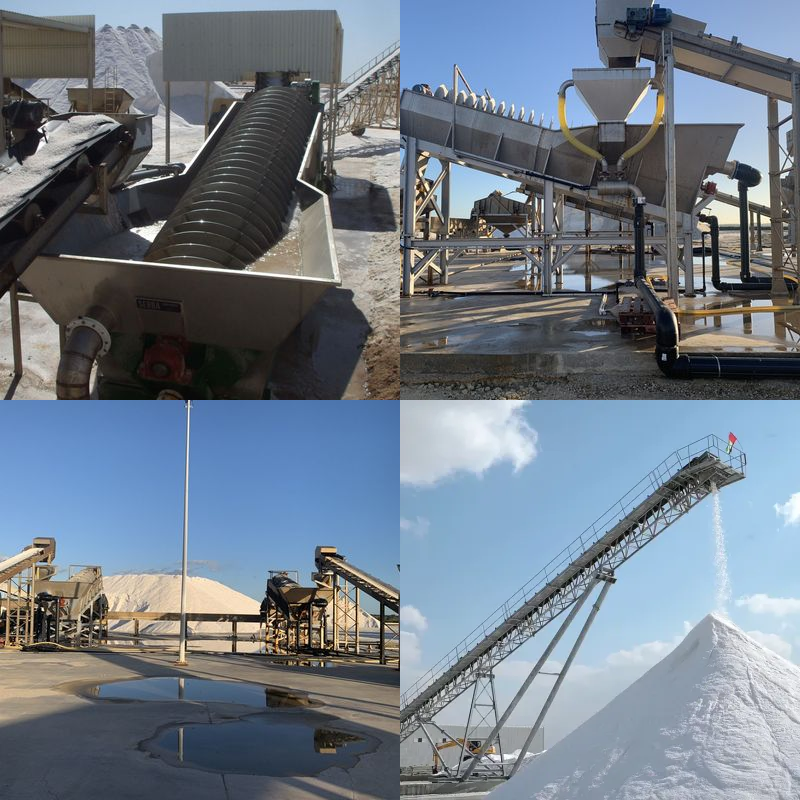
Industrial Salt Washing Plant
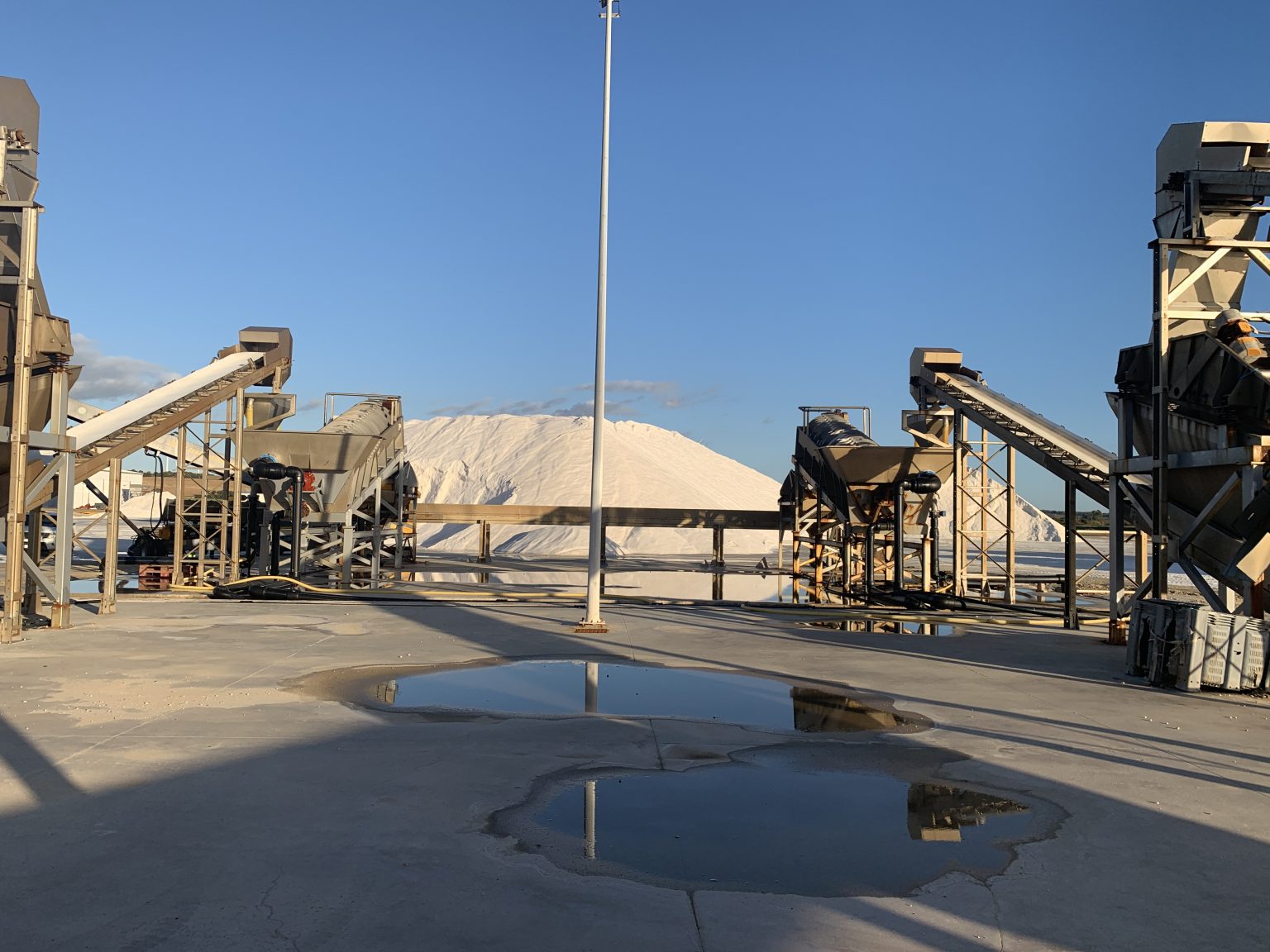
A sequential salt washing plant that receives raw industrial salt, washes it to remove clay and sediments, classifies it by grain size, and prepares it for industrial use or packaging.
Project Concept
An industrial salt washing factory operating via a sequential system: receiving raw salt, washing with water to remove clay and sediments, classifying by grain size, and storing ready for packaging or industrial use.
Project Overview
Washing and classifying raw salt converts a natural raw resource into a market-ready industrial product. The sequential system ensures continuous production with minimal waste, serving water treatment, food, and chemical industries.
Main Components
Key equipment and units that make up the production line
Feeder Unit
- Receives raw salt from trucks or silos
- Continuous feed to first conveyor
- Equipped with flow control gates
- Reception capacity: 1–100 tons/day
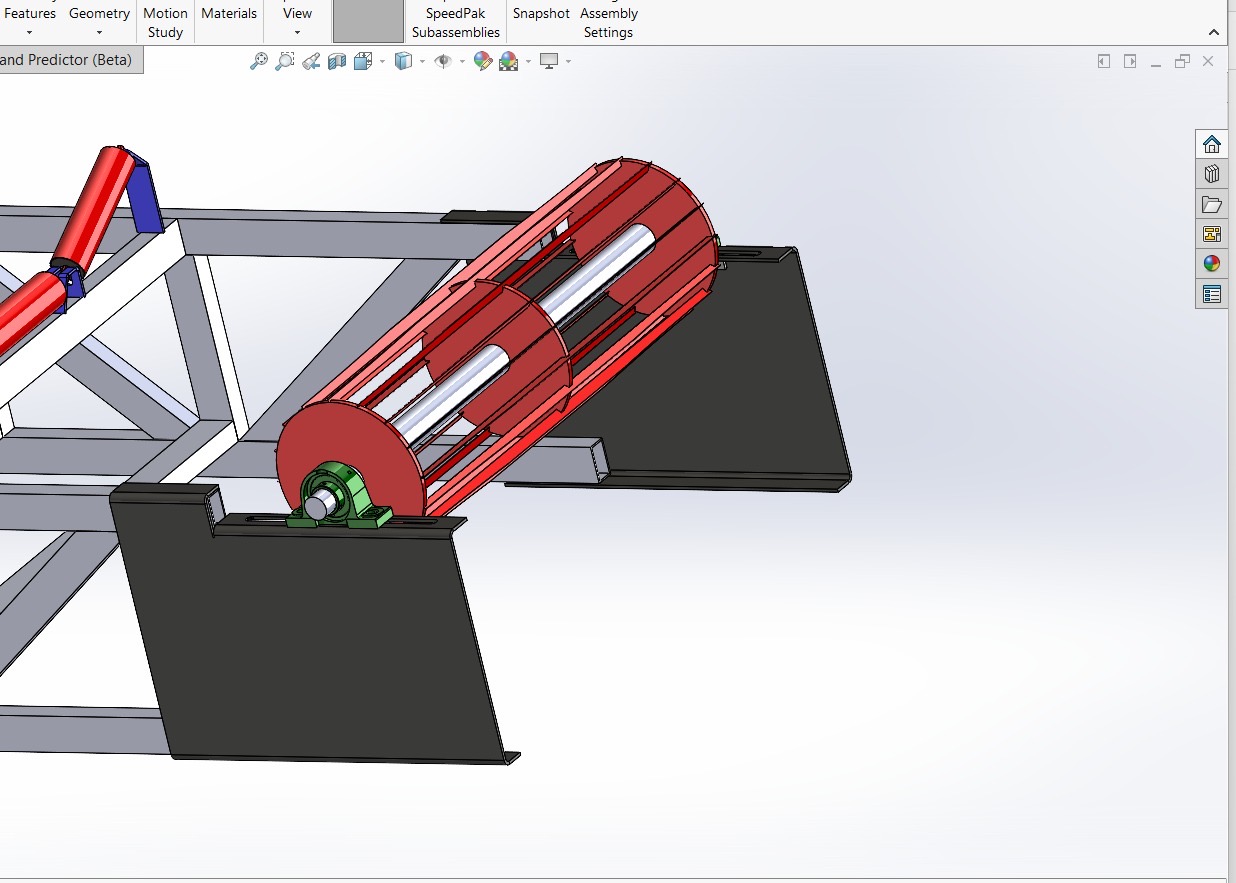
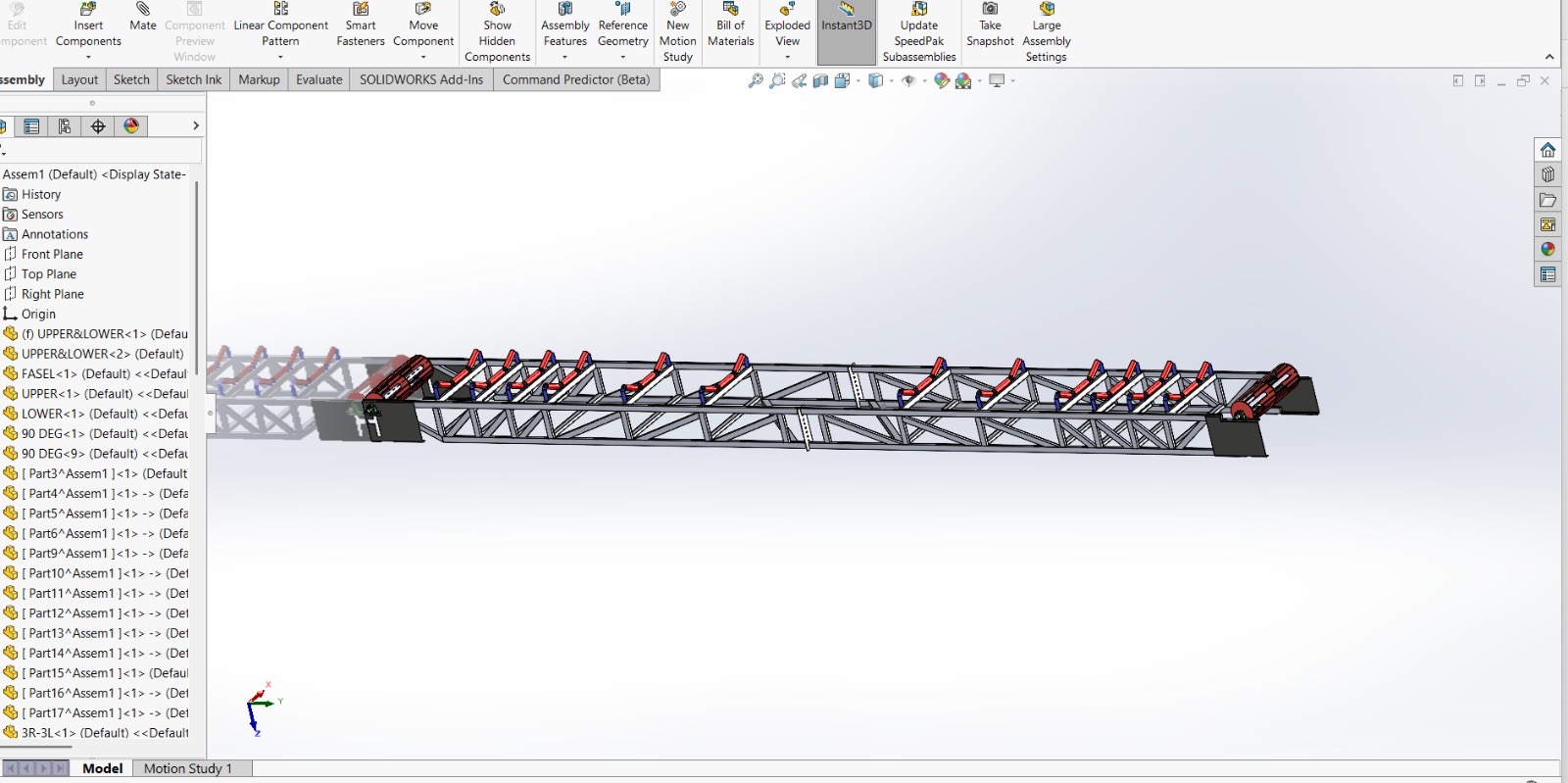
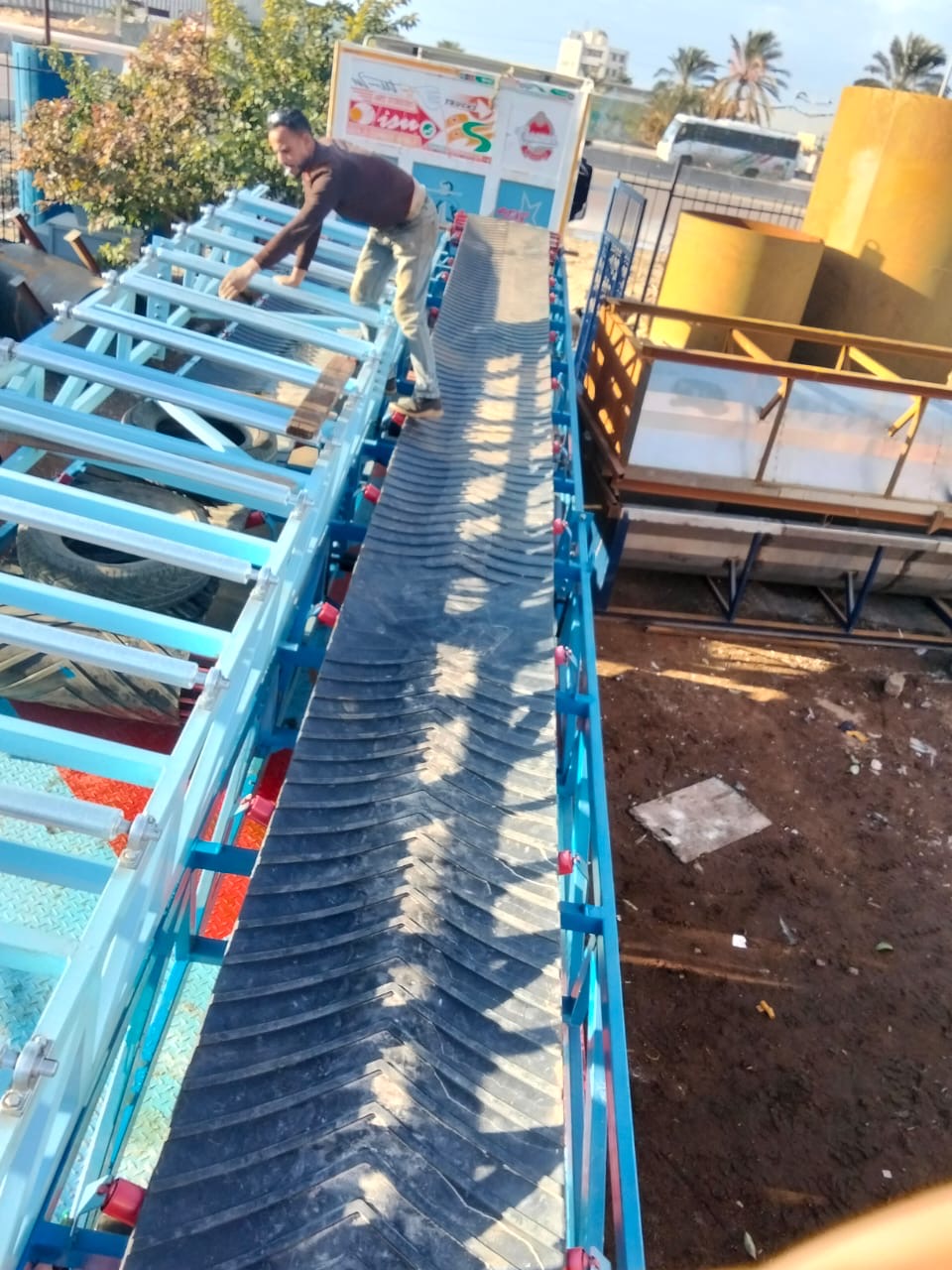
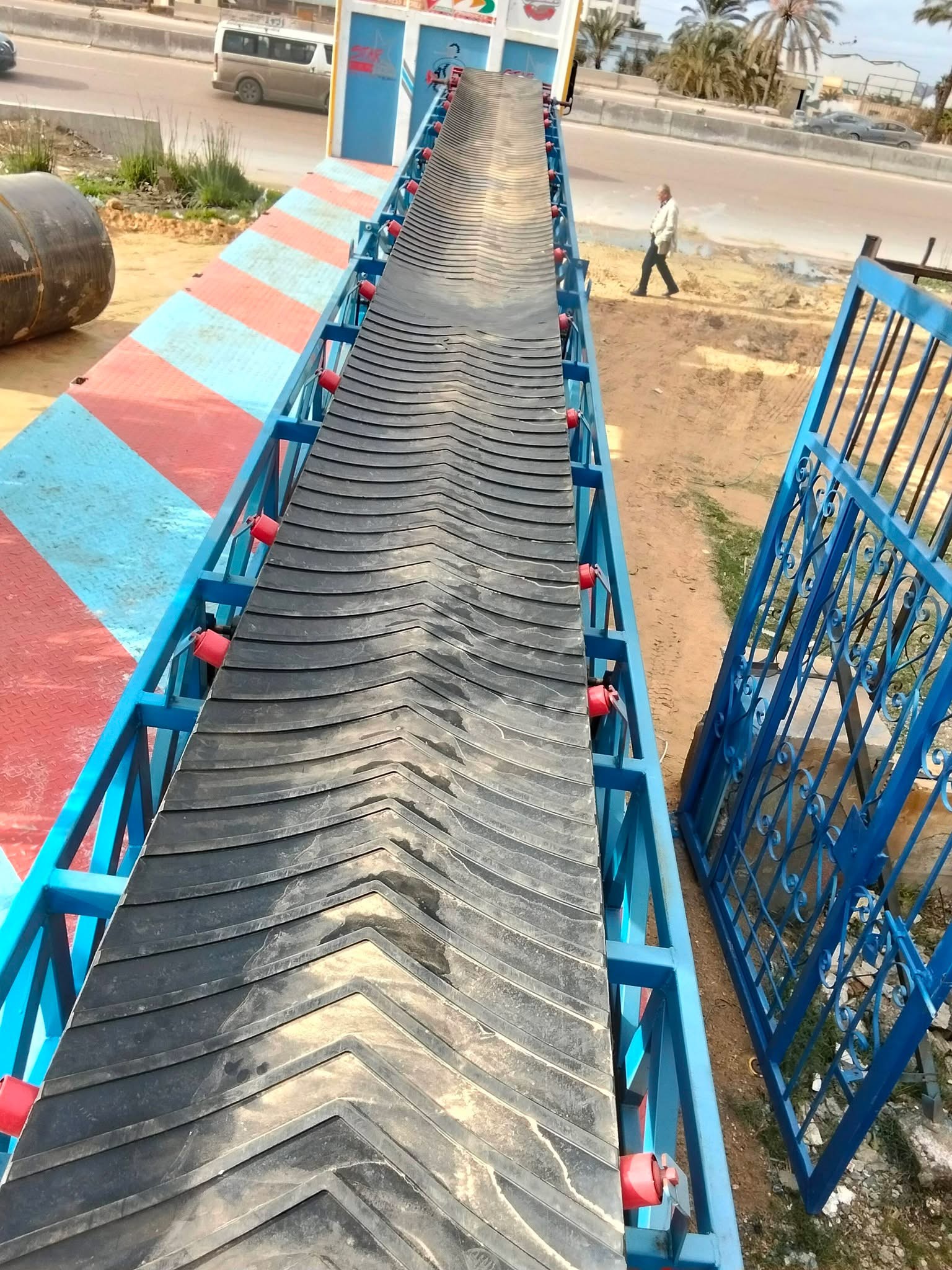
Conveyor 1 – Transport to Washing Unit
- Corrosion-resistant or anti-abrasion steel belt
- Adjustable speed
- Length: 5–15 m (depending on plant design)
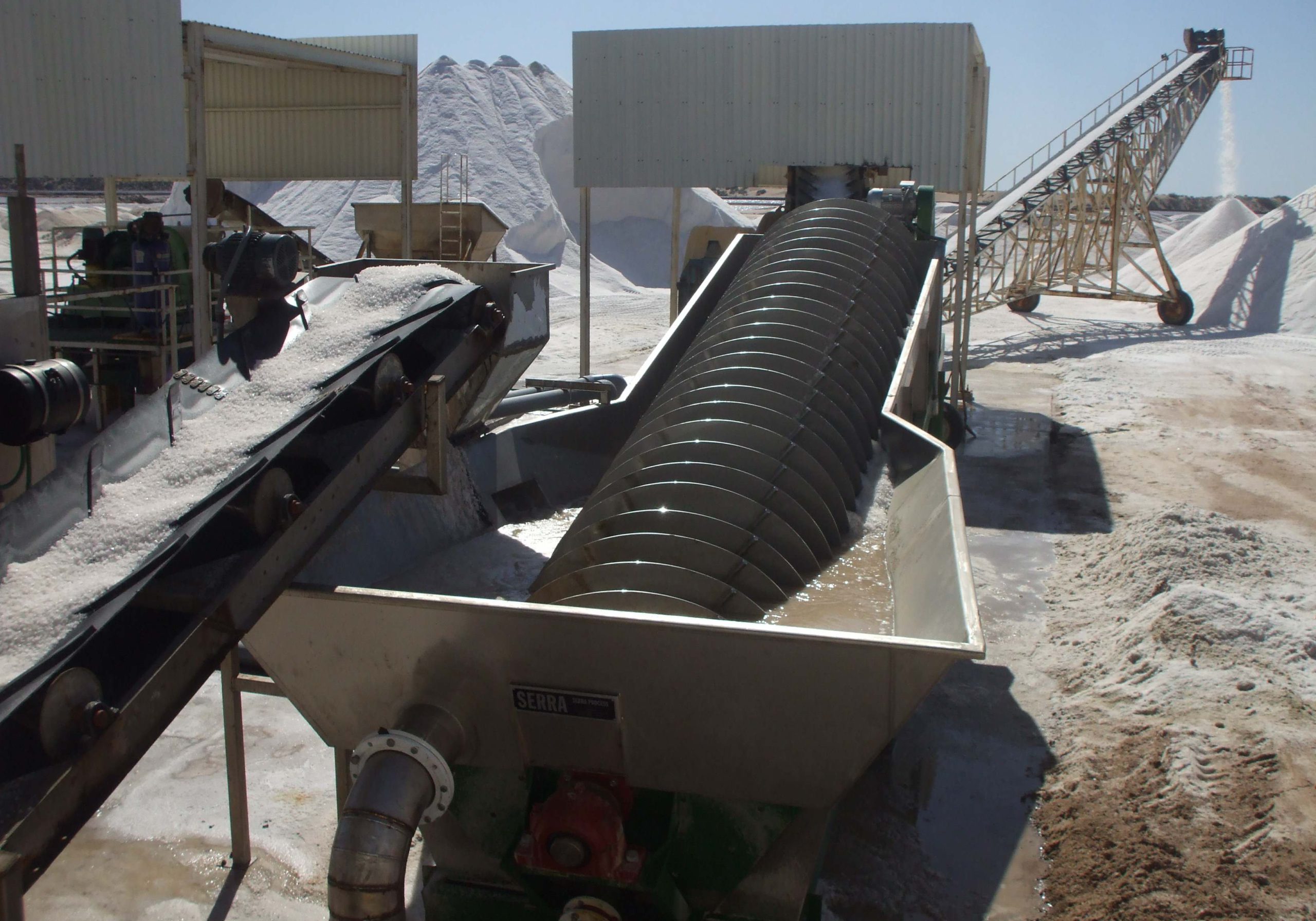
Washing Unit
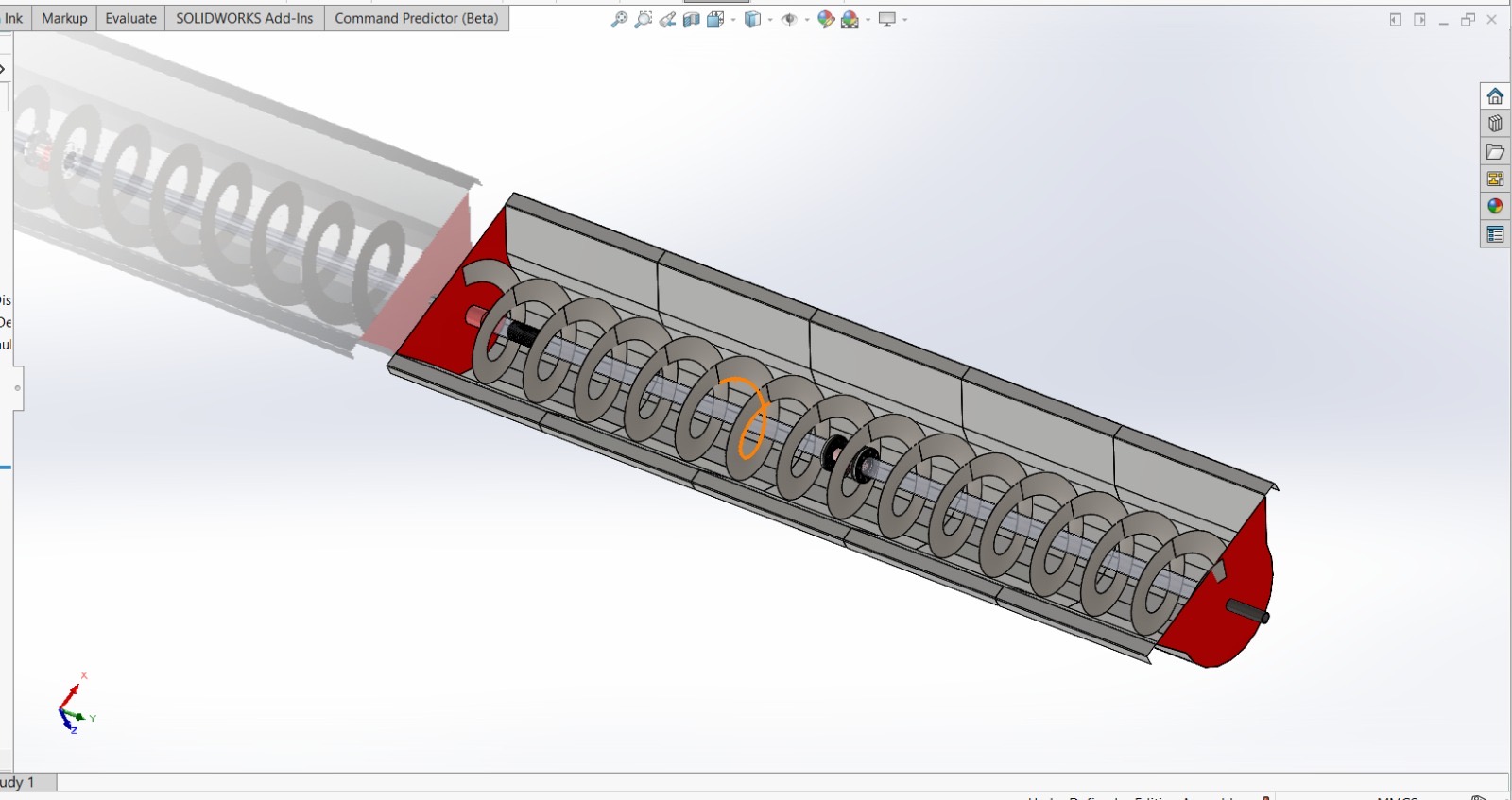
- Washing tank or rotating drum
- Running water with optional water recycling
- Removes clay and impurities
- Continuous agitation with mixer or hydraulic pumps
- Water temperature control: 25–40 °C
Conveyor 2 – Transport to Screening Unit
- Water and moisture resistant belt
- Directly transports washed salt to screening
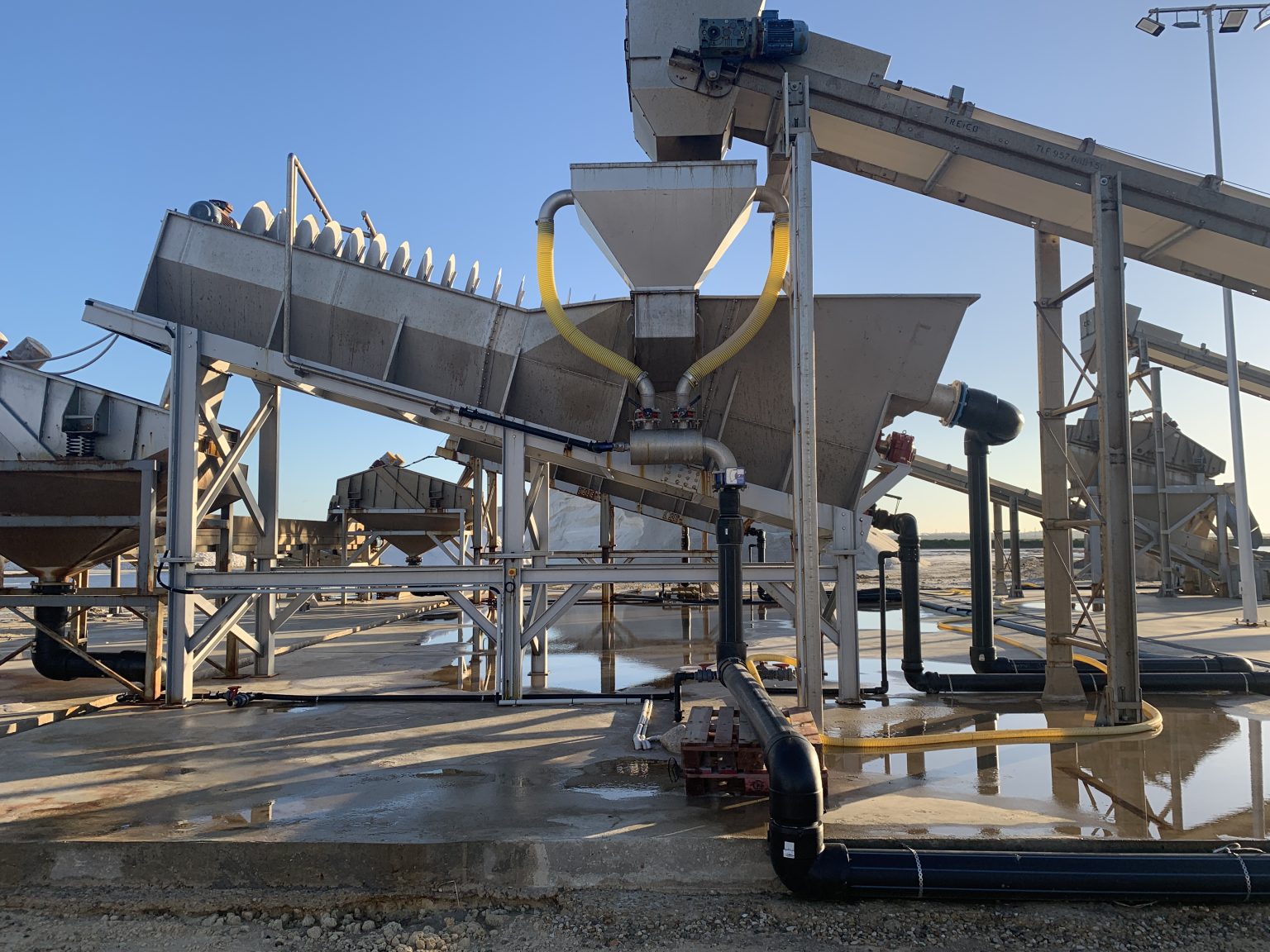
Screening Unit – Classification
- Multi-size vibrating screen
- Separates large and undersized grains
- Sorting accuracy: 0.5–10 mm
- Removes remaining stones and debris
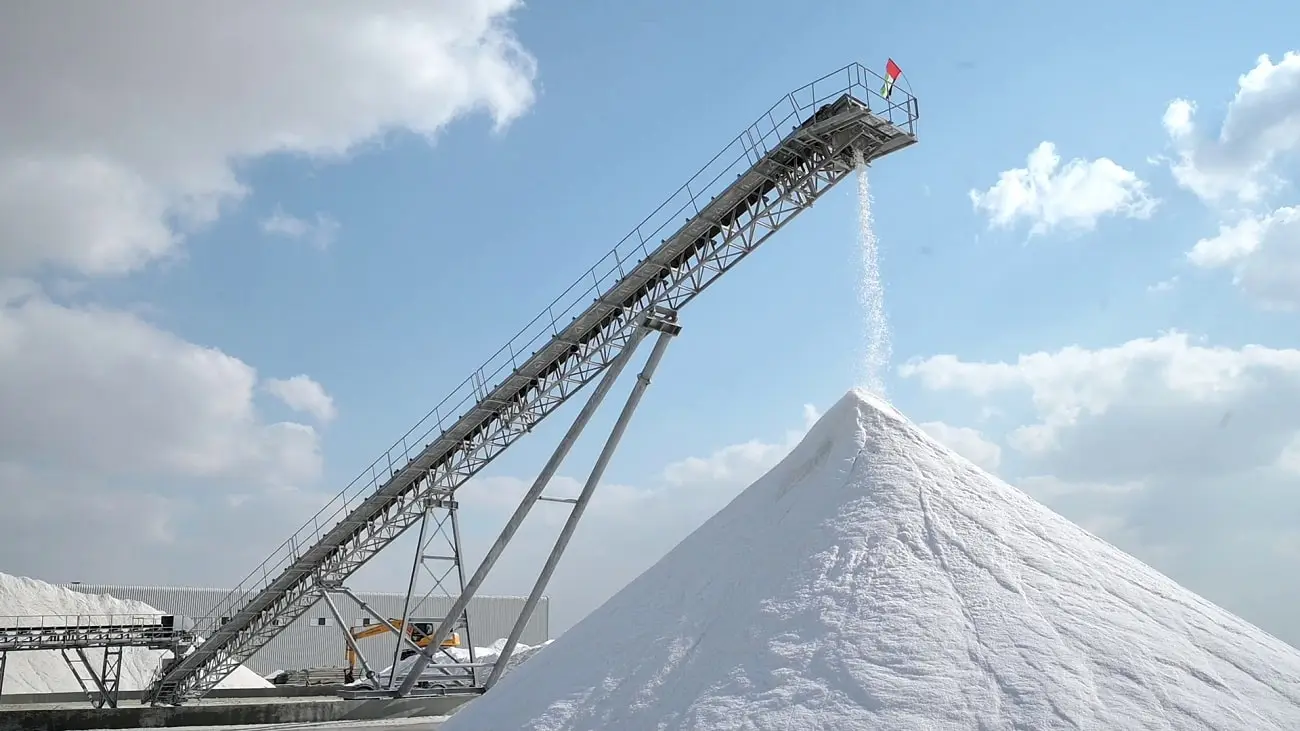
Conveyor 3 – Transport to Storage
- Moisture-resistant belt
- Directly transports pure salt to silos or stacking area
Storage / Stacking Unit
- Temporary silos or open-air storage
- Salt level monitoring
- Capacity: 5–100 tons per project scale
Operating Cycle
Cycle duration: Batch: 4–8 hours per ton; Continuous: runs to 100 tons/day
- 1Feed raw salt on Feeder
- 2Transport to washing unit via Conveyor 1
- 3Wash with water and remove sediments
- 4Transport via Conveyor 2 to Screening Unit
- 5Sort salt by grain size
- 6Transport via Conveyor 3 to final storage
Input / Output Ratios
Approximate production yields at different capacities
| Capacity | Raw Input | Washed & Classified Salt | Waste / Impurities |
|---|---|---|---|
| 1 ton | 1,000 kg raw salt | 900–950 kg | 50–100 kg |
| 10 tons | 10 tons | 9–9.5 tons | 0.5–1 ton |
| 50 tons | 50 tons | 45–47 tons | 3–5 tons |
| 100 tons | 100 tons | 90–95 tons | 5–10 tons |
Energy Consumption
Approximate requirements per production capacity
Project Advantages
Continuous or semi-continuous operation
Low loss rate
Produces pure salt ready for industrial use
Flexible design for capacity expansion
Technical & Engineering Study Data – All Capacities
| Project | Capacity (ton/day) | Area (m²) | Power (kW) | Water (m³/day) | Operating System | Engineering Notes |
|---|---|---|---|---|---|---|
| Industrial Salt Washing Plant | 1 | 30 | 5 | 1 | Batch | Feeder, conveyor, washing, screening, storage |
| 10 | 100 | 25 | 8 | Semi-continuous | Longer conveyor belts, more washing tanks | |
| 50 | 400 | 100 | 40 | Continuous | Integrated plant with multiple screening, large storage tanks | |
| 100 | 700 | 200 | 80 | Continuous | Continuous operation, moisture-resistant conveyors, full control system |
Images
Turn Your Idea Into a Full Production Line
Our engineering team will respond within 24 hours with a customised proposal — from concept to turnkey delivery.